2026-10-22 · Miguel Santos
How Salt Air Affects Custom Railings Near the Orange County Coast
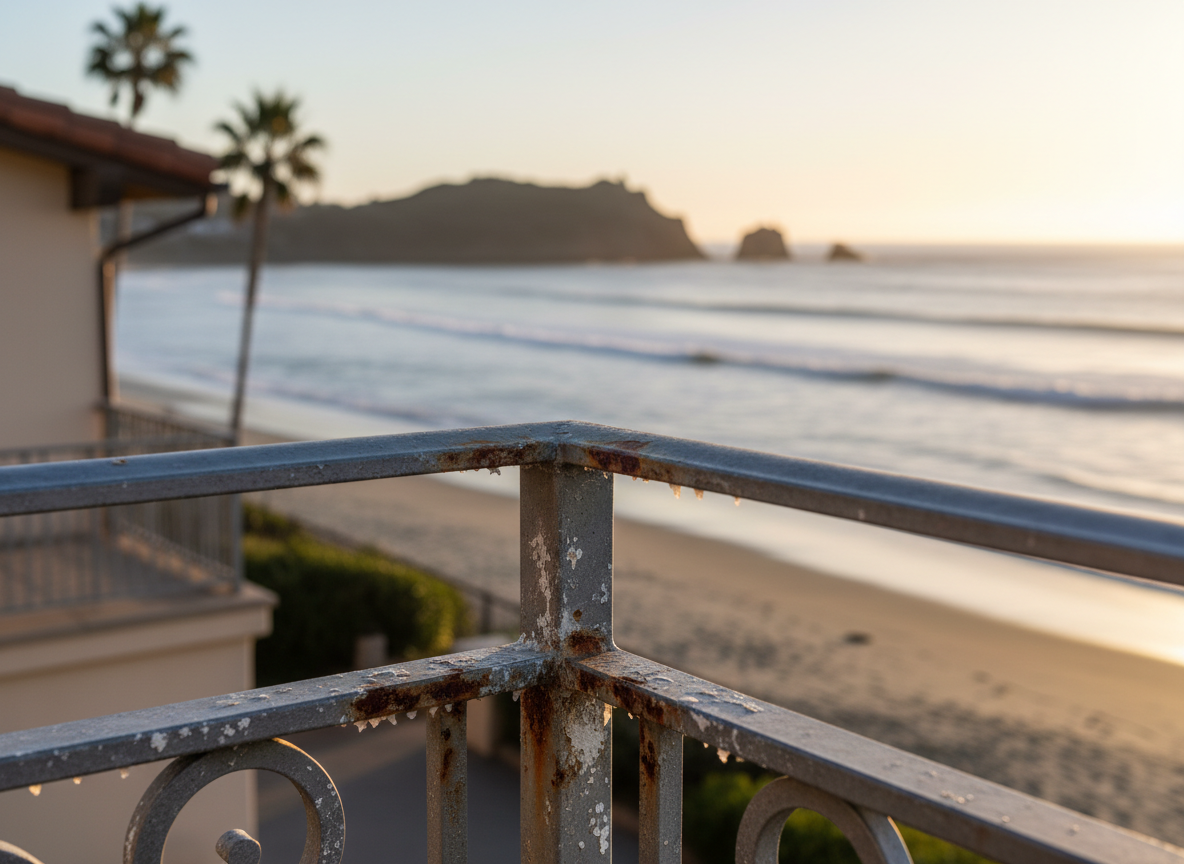
Salt air along the Orange County coast shortens the service life of custom railings by promoting rapid oxidation and pitting, especially on ferrous metals within a few miles of the shoreline in places like Newport Beach and Laguna Beach. The constant moisture combined with sodium chloride creates an electrolyte that drives electrochemical reactions on exposed surfaces, turning minor surface rust into structural weakening within several seasons. Homeowners in Huntington Beach and Dana Point notice white powdery deposits and flaking on rail posts and handrails first, then joint failures where water collects. This pattern differs from inland spots like Irvine, where lower humidity slows the same process.
Corrosion Patterns Along the Coast
In coastal Orange County the marine layer keeps relative humidity above 70 percent most nights, allowing salt crystals to remain on rail surfaces long enough to draw more moisture and deepen pits. Wrought iron railings show the earliest damage because their welded joints trap salt water that cannot evaporate quickly in the mild but persistent marine climate. Aluminum systems fare better yet still develop white oxidation blooms on lower rails where dew collects overnight. Cable systems suffer strand corrosion at fittings when the vinyl coating cracks from UV exposure common in open ocean-view lots. These effects appear most clearly on south- and west-facing decks that receive direct afternoon sun after the morning marine layer burns off.
Material Performance in Salt Air
Choosing the right material for a custom railing near the coast starts with matching the alloy or finish to the expected salt load. Powder-coated aluminum holds up longest because the coating acts as a barrier while the metal itself resists oxidation. Stainless cable in marine-grade 316 alloy outperforms galvanized options when installed on properties in Newport Beach and Costa Mesa. Glass panel systems avoid metal corrosion altogether yet require stainless standoffs that still need periodic inspection. Homeowners weighing options often review Choosing Cable Versus Glass Railings for Ocean-View Properties before final selection. Wrought iron can work when hot-dip galvanized first and then painted, though the extra steps raise initial cost.
Practical Maintenance Steps
Regular rinsing with fresh water removes salt before it embeds, especially after Santa Ana winds carry extra spray inland. A monthly hose-down of lower rails and posts during dry months prevents the buildup that leads to pitting. Inspecting fasteners and welds twice a year catches early loosening caused by expansion from corrosion products. Applying a marine-grade protectant to exposed metal surfaces after cleaning adds a sacrificial layer that slows the next salt cycle. For properties in Huntington Beach and Dana Point, pairing this routine with the guidance in Seasonal Maintenance for Outdoor Railings Before Winter Rains keeps systems functional longer. Orange County Custom Railing maintains regular hours Monday through Friday 8am–6pm and Saturday 9am–2pm for consultations on these upkeep practices.
When Replacement Becomes Necessary
Once pitting reaches 1/8 inch depth or joints show visible movement, replacement prevents safety issues on decks and stairs. In older coastal homes the original railings often lack modern coatings, making full custom railing fabrication the practical next step rather than repeated repairs. Replacement also allows upgrades to aluminum or cable systems better suited to the salt environment found from Laguna Beach through Costa Mesa.